Dogecoin: DBeS2gHm79fHsxkYWTatbCYonxxc8fQn4M
Bitcoin: bc1qga4p8wxjvc8vx2l9p5y35ac7t0q0jqf8lmsf9y

Tuesday, September 10, 2019

Herd Behavior In Financial Markets: A Study On Contagion Theory


 "Men, it has been well said, think in herds; it will be seen that they go mad in herds, while they only recover their senses slowly and one by one." Charles Mackay (1841)
This is the opening quote in the paper Herd Behavior in Financial Markets by Sushil Bikhchandani and Sunil Sharma published as an International Monetary Fund staff paper in 2001. Marco Cipriani and Antonio Guarino decided to take another look at this paper, published by the Federal Reserve Bank of New York, to see if its conclusions could help to better understand the market in 2015. Likewise, I want to use it to see if it can help to gain a better perspective on the level of volatility in the market today.

Herd Behavior Defined

First, let's define herding. Herding is when a trader disregards their own knowledge or trading plan to follow the behavior of the crowd. The reasons for the Fed's interest in the subject is clear -- to understand how to get ahead of, or put tools in place to counteract, contagion, specifically information contagion as discussed in the article Federal Reserve Bank Of New York: A Study On Contagion Theory.

The authors split the identification of "herding" from the use of data into two categories: spurious and real. Some herding, characterized by clustering in statistical data, may be the result of a public announcement rather than true herd behavior. In response to this the authors present another way to measure herd behavior through a theoretical model.

The Theoretical Herding Model

The model used to test the theory is based on an asset that is traded over a period of time. An event occurs at the beginning of each day the asset is traded. Some traders receive or find public or private information about the asset -- these are considered "informed" investors. All other traders are therefore considered to be uninformed and are therefore considered to be trading due to liquidity or re-balancing. If no event occurs, all traders are uninformed.

So how does this scenario generally play out. In a nutshell, the herd convinces the trader to put its theory over the traders own knowledge about the stock. Here's the thought process:
  1. The informed investor knows something happened to change the fundamental price of the asset.
  2. The investor realizes that their position is the opposite of what's occurring in the market.
  3. The informed investor weighs the importance of their own private information or trading plan against the asset's movement in the market.
  4. If the market movement is deep enough the trader will go against her own plan in favor of the market. The rationale being that the information traders are trading on in the market must be better than what she knows.
In this way, herd trading is a made into a rational decision, at least in our minds.

Example: Ashland's Herd Traders

The authors use Ashland Inc. (NYSE: ASH) in 1995 to further illustrate the theory.
We find that herding on Ashland Inc. occurred quite often: on average, the proportion of herd buyers was 2 percent and that of herd sellers was 4 percent. Additionally, we find that not only did herding occur but also it was at times misdirected (that is, herd buying in a day when the asset's fundamental value declined and herd selling in a day when the asset's fundamental value increased).
The authors go on to find that "the price was 4 percent further away from its fundamental value than it would otherwise have been." This seems like a rather small percentage, but the data supports these findings and according to the VIX, contrary to perception, the market is no more volatile in 2015 than it was in 1995. Based on the chart below, it appears the same can be said for 2019. 


So What

What are the implications of this for the Fed and for the individual investor? The implication is that what we think is volatility due to fundamental changes in the market's value may actually be due to the herd behavior of traders with greater levels of capital to spend. They'll have even more to spend if rates go negative.

That said, it's hard to make definitive conclusions about the application of this data until we have a way to measure a stock's "herd" appeal.
  • Perhaps companies with a higher degree of volume or volatility also have a higher percentage of herd traders. 
  • Perhaps this is the reason stock runs are often followed by corrections. 
  • Perhaps stocks with a high P/E have a higher degree of herd buyers? 
A "Herd Index", theoretically, would be able to provide buy and sell signals that were even more reliable than P/E multiples in finding over- or under-priced stocks. As of this writing I am unaware of any such measure. That said, JPMorgan recently created the “Volfefe Index” to measure the impact of President Trump's tweets on the market so anything is possible. 

Monday, September 9, 2019

Should You Diversify Your Portfolio With Bitcoin?


To buy bitcoin or not to buy bitcoin...that is the question.

It can be a hard question to answer and rightly so. 

The good news is that you don't have to draw a line in the sand. This is not a do or die situation (unless you make it one). You have the liberty to invest your wealth wherever you want. And, if there's anything I've learned in all my years of studying financial markets, it is that diversity is the key to riding out economic cycles. Your portfolio gains strength from diversifying your assets, especially if those assets aren't correlated with one another. 

I know the media is politicizing the recession, but this has nothing to do with Trump. This is about a global 'bow' that is about to break. All signs are pointing south, from negative interest rates to declining GDP levels. There may be those that have a vested interest in telling you otherwise, but if we use the same barometers of economic health that we've used over the past 60 years, we are due for a recession.  

For example, Fed Chairman Powell was heard across financial media last week saying that he did not think a recession was looming. Meanwhile, his own NY Fed just published the chart below suggesting otherwise. The blue represents periods of recession.

And, if a recession isn't a concern, why are you lowering rates? 

What do I think is going on?

Personally, I think central banks figured out they could make more money from negative rates than by raising the IOER. They're going for the big whale con.

It's hard to know what's going to happen for sure, but one thing is certain, a downturn is coming. The best way to guard against the inevitable downturn is to diversify your asset base. In simpler terms, you never want to put all your eggs in one basket. You certainly don't want to ban the fastest growing asset class in the world from your portfolio. 

Jeff Sprecher (pronounced “Sprecker”), the founder, chairman, and CEO of Intercontinental Exchange (ICE) is also a believer in bitcoin. And, I don't mean that in a general sense. Sprecher is a true believer; an evangelist of sorts. 

Sprecher's name may sound familiar because ICE is also the world’s second largest financial exchange by revenue. ICE also owns NYSE American, the leading platform for mid-cap companies. 

In the bitcoin community, however, Sprecher is known more so for his work as founder of Bakkt, one of the most talked about bitcoin ventures happening this year. ICE is partnering with Microsoft, Boston Consulting Group, and Starbucks to make bitcoin accessible to the world’s largest financial institutions. It gives these uber-large institutions a way to buy and take custody of bitcoin within an end-to-end regulated system approved by the CFTC and NYDFS, and it is "backed" by the reputation of ICE. The venture just went live last week.

Not surprisingly, lots of value changed hands last week as well -- $780 million BTC was moved earlier in the week followed by a $1 billion (94,505 BTC) move that made crypto headlines.

The point is, if you decide to diversify your portfolio with bitcoin you'll be in good company. The largest institutions in the world are preparing to do the same.

The revolution is digital...

Friday, August 30, 2019

1,000 Fake Gold Bars Discovered, Bitcoin's 10-yr Alpha is 338,433,233%, and Hong Kong Loves Crypto

  • Bitcoin's utility over gold has returned as fake gold bars have entered the market.
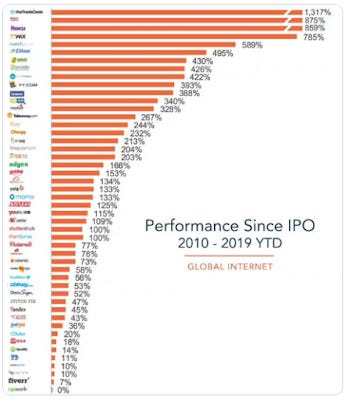
  • Data shows bitcoin’s performance has outstripped mainstream investments in internet firms since 2010 by 338,433,233%.
  • In Hong Kong, bitcoin is selling at a premium due to mass protests.   

Bitcoin's utility over gold has returned as fake gold bars have entered the market. 

One day back in 2017, someone noticed that two gold bars had the same ID number. Ooops. A Reuters report on Aug. 28 said that nearly 1,000 fake bars were found in the vaults of JPMorgan Chase & Co., one of the major banks at the heart of the market in bullion. 

"The forgeries are sophisticated," said the head of Switzerland’s biggest refinery, according to the article, "so thousands more may have gone undetected".

“The latest fake bars ... are highly professionally done,” said Michael Mesaric, the chief executive of refinery Valcambi.

As fake gold bars are being discovered all over the world, the price of gold has actually spiked due to asset quality concerns. Everything is overpriced and central banks are charging investors to deposit funds (negative rates). This is actually fueling more aggressive/risky investing and smart investors are looking for safe alternative investment opportunities like gold, real estate and bitcoin. The same reasons that are driving people to bitcoin are driving them to gold, but gold is flawed for two reasons: 1) it is heavy and 2) it can be faked.

Would you accept gold from someone you don't trust without verifying its authenticity? I like gold, but bitcoin requires no trust. The trust is built into the underlying technology.

Bitcoin’s performance has outstripped mainstream investments


It's not surprising that according to the CEO of blockchain-focused magazine Block Journal, bitcoin’s performance has outstripped mainstream investments in internet firms since 2010 by 338,433,233% based on the following data:


That's a lot of alpha. The price went from just a few cents to thousands of dollars over a 10-year period.

In some places like Hong Kong, bitcoin is even selling at a premium (several hundred dollars).


Why is bitcoin selling for a premium in Hong Kong?


The pro-democracy, anti-government protest movement in Hong-Kong is spurring wider adoption of cryptocurrencies like bitcoin. 


Yahoo! Finance reported that the political upheaval in the city "has made local businesses and individuals switch to using non-sovereign and decentralized currency."  Hong Kong department store Pricerite announced that it would begin accepting bitcoin, litecoin and ether. Genesis Block has been operating 14 crypto ATMs across the city. 


That's not all. Earlier this month, protestors initiated an action to withdraw as much money as possible from their bank accounts. The goal: protect personal assets and send a warning to Chinese authorities. It has also been reported that a number of wealthy individuals ($100 million +) have begun moving wealth offshore.

This is happening all over the world and there's a common theme here. Bitcoin and democracy are linked because bitcoin is a democratized form of money, whereas fiat (like the dollar) is a centralized or authoritarian form of money. I talk about this link in the post: Bitcoin & America Have Common Goals: They Are Linked By The Ideal of Democracy.

Tuesday, August 27, 2019

Yang Endorses Blockchain, Houston Rockets GM Buys More Bitcoin, and Binance Enters The Lending Game

Three big stories in the bitcoin space I'd like to share with you today: 

  • Bitcoin, crypto, and blockchain have become a 2020 U.S. presidential issue.
  • Daryl Morey, the general manager of the Houston Rockets basketball team, buys more bitcoin.
  • Binance enters the lending game; holders of Binance Coin, Ethereum Classic and Tether will be able to lend assets and earn interest.
  •  

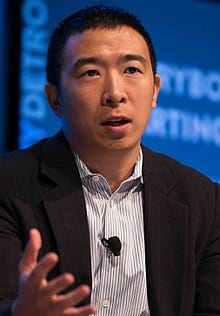
Bitcoin, crypto, and blockchain have become a 2020 U.S. presidential issue. Democratic presidential hopeful Andrew Yang endorsed blockchain (the technology that bitcoin sits on) and wants to implement a blockchain based mobile voting system.

Andrew Yang

"It’s ridiculous that in 2020 we are still standing in line for hours to vote in antiquated voting booths,"

"It is 100% technically possible to have fraud-proof voting on our mobile phones today using the blockchain. This would revolutionize true democracy and increase participation to include all Americans—those without smartphones could use the legacy system and lines would be very short."

-Yang Campaign Website

I couldn't agree more. This isn't surprising coming from Yang -- he's the only presidential hopeful talking about the real challenges facing the economy today, like automation. My personal dream-team is Yang/Tulsi, but I'll save that for another post. 


I became even more interested in Yang after president Trump tweeted that he thought bitcoin and other crypto were "unregulated crypto assets" that can "facilitate unlawful behavior, including drug trade and other illegal activity." The truth is, most drug trades prefer the U.S. dollar.

I doubled down and donated to Yang after U.S. Treasury secretary Steven Mnuchin labelled bitcoin as a national security issue. I started making phone calls for Yang in May, when congressman Brad Sherman made a plea to abolish Bitcoin because he views it as a direct threat to the U.S. dollar. He wants to make the purchase of bitcoin illegal.

Thankfully, we have folks like Yang and Ron Paul coming out in favor of bitcoin because if the US bans bitcoin, it will mean that our fate is tied to the American dollar. You can read more about my prediction for the U.S. if it bans bitcoin in the post: An Argument Against The Ban of Bitcoin: Bitcoin Represents a Threat to The Permanent State, Not America. Namely, it will tie our demise to the U.S. dollar.

In other bitcoin news, Daryl Morey, the general manager of the Houston Rockets basketball team, recently tweeted “I just bought more” in response to a pro-Bitcoin tweet. Morey is not alone. I've seen dozens of tweets like this. There's a long list of celebrities, athletes and musicians that are pro-Bitcoin. Billionaire tech investor Mark Cuban hinted at adding crypto payments last year. Why? Not only does bitcoin represent a safe haven from the coming financial crisis, but it comes with additional technological features that fiat does not, AND, as Obama said, it's like carrying a Swiss bank account in your wallet.

Last but not least in bitcoin news is one of my favorite places to buy crypto: Binance. In terms of new offerings for coins (ICOs), Binance is THE BEST. So imagine my surprise when I heard Binance was getting into the lending game. I'm going to write another post explaining why this is such a powerful move on Binance's part, but the most important takeaway here is that holders of Binance Coin, Ethereum Classic and Tether will be able to lend assets and earn interest through a new service called Binance Lending. Interest is paid out after the loan matures. So, at a time when the world's central banks are pushing negative interest rates, one of the strongest players in the crypto community wants to pay you interest. The irony.

Friday, August 23, 2019

Bitcoin & America Have Common Goals: They Are Linked By The Ideal of Democracy

When in the course of human events it becomes necessary for one people to dissolve the political bands which have connected them with another and to assume among the powers of the earth, the separate and equal station to which the Laws of Nature and of Nature's God entitle them, a decent respect to the opinions of mankind requires that they should declare the causes which impel them to the separation.

                         -The Unanimous Declaration of the Thirteen United States of America, JULY 4, 1776


In my last post: An Argument Against The Ban of Bitcoin: Bitcoin Represents a Threat to The Permanent State, Not America, I talked about my prediction for the U.S. if it bans bitcoin. Namely, it will tie our demise to the U.S. dollar. 

Ultimately, the post was a declaration of sorts. Like the Declaration of Independence quoted above, it was an attempt to declare the causes which should impel America to separate itself from the dollar and the U.S. central banking authority. And, the tool to bring about the separation is bitcoin.

In 2009, 53 police officers in Afghanistan were paid by a new mobile service called M-Paisa. This was a pilot program to see if public sector jobs could be paid with M-Paisa. When the officers received payment they also noticed a 30% pay raise. Perhaps this was compensation for participating in the pilot? No. This was the amount the officers should have been getting all along, but superior officers had been skimming off of salaries. M-Paisa payments made the police officers very happy, but the mayors, not so much. 

This is a micro example of what digital payment services can do to eliminate the middle-man and reduce corruption. Digital currencies have the same impact at the macro level. Here's a quote from an article in Forbes describing the impact of M-Pesa on Kenya's economy:

In Kenya, M-Pesa has been so successful that traditional banks have come to see it as a serious competitor.  At first, these banks sought to limit M-Pesa by seeking regulations from the Kenyan government, but increasingly they have begun to offer mobile banking services that attempt to disrupt M-Pesa’s monopoly of the mobile money market.

In other words, M-Pesa has gained so much traction that the government is worried because they are losing both power and money, but the end result is a more balanced economy.

To further support the theory, one study recently found that "increased access to mobile money has increased long-term consumption in Kenya and reduced the number of households in extreme poverty."  The study estimates that it lifted 2% of Kenyan households out of poverty, with the impact being more pronounced in female-headed households. Women using M-Pesa tended to move out of agriculture and into business (Science, p. 1288). Mobile Money, the study concludes:

...a service that allows monetary value to be stored on a mobile phone and sent to other Mobile money has therefore increased the efficiency of the allocation of consumption over time while allowing a more efficient allocation of labor, resulting in a meaningful reduction of poverty in Kenya.


Like toll-booths, intermediaries (banks, government, corporations) are there to collect some sort of tax or fee from us, but what happens when we can go from A to B without intermediaries?

Paradigm Shift: M-Pesa, M-Paisa, MCash, bKash and EasyPaisa

Today almost every household in Kenya uses M-Pesa. It allows anyone with a mobile phone to transfer money. It also has a financing and micro-financing service. Started in 2007 by the largest mobile network operators in Kenya and Tanzania, the operation later expanded to Afghanistan, South Africa, India, Romania and Albania. 


The growth of the M-Pesa market mirrors bitcoin. The mobile phone market overall has over 900 million subscribers in Africa and over 3.7 billion in Asia. M-Pesa isn't the only mobile payment service. There's also M-Paisa in Afghanistan, Smart in the Philippines, MCash and bKash in Bangladesh, and EasyPaisa in Pakistan (2009).  According to the Global Mobile Systems Association (GMSA) there are now 277 live services across 92 markets (two-thirds of which are low- and middle-income countries). The report goes on to say that:

Registered accounts grew nearly six-fold in the last five years to more than half a billion in 2016, helped by a growing network of mobile money agents. In 2016, there were more than 4.3 million registered agent outlets, of which 2.3 million were active on a monthly basis; thirty countries now have ten times more active agents than bank branches, bringing mobile money within reach of millions of unbanked households.

So what can these experiments tell us about what we can expect will happen in the United States with more widespread use of bitcoin?

Poverty & Digital Currency

Bitcoin is much more than just a digital currency (for more on what bitcoin is, please click here). Likewise, M-Pesa is more than a cell phone service. The two have much in common, most importantly they cut out the middle-man which is impacting global economics at the micro- and macro-level.  

Scientists are attributing M-Pesa with lifting people out of poverty, which is something the U.N. is shining a spotlight on. In fact, the U.N. Special Rapporteur on extreme poverty and human rights has written a report about extreme poverty in America. 

It's hard to imagine that anyone in the United States, the richest country in the world, could be living in extreme poverty, but in Alabama 19 of 55 individuals tested positive for hookworm, a disease which was thought to have been eradicated in the U.S. by the 1980s. Hookworm tends to thrive in regions of extreme poverty with poor sanitation and it is thriving in certain parts of America as well. 

The only way for the richest country in the world to be home to conditions of extreme poverty is for rampant corruption to exist. The best place to put our collective energy (literally) is not in the hands of a new set of men and women to be corrupted by the 1% every four years, but in bitcoin and other related digital currencies in use around the world (for an example of what blockchain and bitcoin can do, take a look at what Estonia is doing here)

Final Thoughts: Transfer of Wealth

We are witnessing the largest transfer of wealth in modern history. The police officer example above is only a glimpse at the potential we stand to recoup. The current system is a zero-sum game, so what the uber-wealthy lose will not be lost, but transferred to its rightful owners through bitcoin and other digital currencies. All the money that used to go to bribes, government corruption and banks is now working its way back into the hands of "the people" which is reducing poverty worldwide.

Kenya's government couldn't shut M-Pesa down. Likewise, if the US government could forbid the use of bitcoin, it would have done so already. Bitcoin is more than voting with your dollars, it's investing in a new world order that brings all these payment systems together. You can even buy bitcoin with M-Pesa using LocalBitcoins, a peer-to-peer bitcoin exchange network.

Bitcoin has no nationality. It has no history of debt or corruption. It has no spoken language. It has no borders. It has no tribe. It is incapable of war. It is intangible in nature. And, best of all, it requires no assistance from corruptible minds. It is in the process of accumulating wealth from national currencies (G5). This is why the price of bitcoin will continue to rise with the fall of the dollar, pound, yen and euro.

Friday, May 17, 2019

A Proposal For Technological/Corporate Reparations


It's not ideal, but we live in a corporate state that's driven by profit. To hone in on the problem, it's not the corporation that's bad, it's the power we give them as corporate entities. Their only directive is one of profit as stated in the corporate bylaws. The good news is that corporations are very efficient organizations. If you dangle the right candy, they can make change happen over night. I think it's time to start using corporations to our advantage.

I'm working on a proposal that places a retroactive corporate dividend (in the form of cash or corporate coins) on all jobs that have been automated. The automation effectively creates a capital asset that only the company is benefiting from and I'm suggesting we ask for technological reparations.

Mechanics: The dividend goes straight to the worker and the people that live in that community. The dividend is connected to the capital asset (automation technology).

Why would a company do this? The corporation benefits from increased spending on their products and an improved corporate image. The payment is connected with increased productivity and profitability, so the profits are aligned.

Bottom line:

Viable corporations need to figure out a way to stay viable and total automation doesn't work unless workers have an income. Corporations can provide that basic universal income.


Thursday, May 9, 2019

Coinpot Bitcoin Faucet Update  (5/9/2019) — Up ~$700 in 18 Months


This is a follow up to the original article: How Much Can You Make on Coinpot in 1 Year?


It’s been almost 18 months since I wrote that article. The goal was to see if bitcoin faucets were a viable way to earn free bitcoin. I, like many others, was skeptical. Free bitcoin? There must be a catch. So I started my little experiment with a skeptical eye. Specifically, I wanted to see how much you could make on Coinpot in 1 year.
 
Buy gold & silver bullion - Goldbroker.com

With my model I surmised that I could look forward to a minimum of $900. Of course I had no way of knowing that bitcoin would be attacked from every angle in 2018. As a result, the price of bitcoin dropped significantly, but it’s worth noting that it never dropped below the price of an ounce of gold. Gold — the world’s most precious metal.

So, here we are, almost 18 months in and I’m up roughly $700. Did I make the $900 mark? No. But, $700 isn’t bad for what I was told was a “scam bitcoin faucet”. I kept waiting for something to happen to the site throughout the year. I kept waiting for my account to get hacked. I kept waiting for the site to change the rules. It never happened. Everything has been easy. All withdrawals have been made.

Round of applause for those of you holding it down over there at Coinpot.

And, the beautiful thing is that we’re coming out of a market bottom in bitcoin. It is my belief that we are currently on the front end of a bull market. Bitcoin has taken a beating over the past year, but I still think it will be the world’s reserve currency. I still think it could reach $4 million or more in 10 years.

(For more on why I still love Bitcoin read: Why Am I Still In Love With Bitcoin in 2019?)

Okay, so I’m a believer in bitcoin faucets. I especially like the fact that anyone (beginner to advanced) can start making bitcoin with these faucets and there’s no risk because you’re earning bitcoin as opposed to buying it. 

Now what? Now, that I know what works and what doesn’t, I’m going to research other bitcoin faucet programs. I’m also going to see if there are other ways to earn bitcoin risk-free.

Tuesday, May 7, 2019

Why Am I Still In Love With Bitcoin in 2019?


There are many reasons to like bitcoin. For a list of the financial reasons, read my article entitled: Bitcoin Valuation: $4 Million - | Seeking Alpha


It was in this article that I first announced my belief that bitcoin's value could easily reach $4 million. First, yes, I still think $4 million is possible. In fact, I think it's more possible than ever, because the banking cartel has thrown everything it can at bitcoin and it's still thriving. We also have applications like Abra that make it possible for bitcoin to become the world's reserve currency (more on the mechanics of that in a later post. Abra discusses it on their website as well).

Moving on to the point of this post, however, is that I love the fact that bitcoin can't be controlled. That lack of controller-ship appeals to me as a way to dis-empower the power structure. I liken it to the pride I'd feel for a son or daughter that became a revolutionary. Indeed, if bitcoin were a person, the power structure would have put him on a modern day cross. Perhaps bitcoin and Assange could share the same cell. I digress. Back to the point...

Bitcoin can't be controlled by banks, government or anyone else. It is a truly decentralized form of exchange that requires the approval of everyone that owns it to be controlled.

This is not a theory. This kind of technology is here. Bitcoin is the embodiment of that technology and it's in its 9th year. It's held up to attack after attack. And, if it could be controlled, they would have figured out a way to do it by now. 

Today, Bitcoin stands at well over the price of gold. For all those pessimists, even when bitcoin dropped to its lowest levels over the latest pullback, it never dropped below the price of gold. Gold, the world's most valuable and precious metal.

So, bitcoin's viability has been tested and it has passed every one of their tests. What next?

What's Next: Bankers Civil War

From Asia to North America to Europe, quantitative easing and ample reserves are the new black. Which is to say, it's all the rage. Nation states hate inflation, but they love quantitative easing, which is a bit like saying I hate food, but I love to eat. It's schizophrenic. The schizophrenia is brought about by extreme inner conflict between greed and power. Some bankers see quantitative easing and the IOER scheme as the last big grab, others see it as a hedge against an inevitable foe called inflation. I'll cover more on the growing civil war within the banking industry in a later post.

My point is that the Federal Reserve's clear loss of control over the fed funds rate and the plan to make quantitative easing a permanent program have created a surge in bitcoin in recent months. It all started around March 20 -- the day the Fed announced the FOMC decision to keep rates steady. That's also the day the fed funds rate started outpacing the IOER. Some folks didn't like that decision and now we have a civil war within the banking industry.

That's why bitcoin has surged in recent months. It is a condemnation of the lack of control, a condemnation of gross negligence and irresponsibility.

And, every time a nation or group has a disagreement with their government, bitcoin will be there, arms held wide.

Bitcoin gives the world all kinds of reasons to love it.

We now have a viable alternative to reckless economic behavior, a new heavy weight has stepped into the ring to fight for us. Not just for North America, but for every group in the world. Bitcoin is, and is currently in the process of becoming, the world's reserve currency.

With this comes the end to monetary corruption. With this comes a sort of transparency and freedom that this country's forefathers could only dream about.

Bitcoin does not solve all of our problems, but it gives us the ability to be free. What we earn will truly be our own. Bitcoin can't be confiscated, it can't be burned, it can't be deducted from, it can't be turned against us or taken down. It has no language, nationality, color, religion or creed and it has come, like a savior, to save us from ourselves. (Jesus was a revolutionary too)

If you're looking for a place to get started with bitcoin investments, take a look at Abra. Read what they're about and how they differ from the competition. If bitcoin does become the reserve currency of the world, it will be in large part due to the work Abra's doing.


Monday, May 6, 2019

A Quick Review of Vice's Show Outliers, Ep. 1: "Have You Ever Wanted To Drop Out Of Capitalism?"


In a series called "Outliers", VICE "explores worlds beyond the economic mainstream, meeting people who’ve chosen unusual and sometimes radical relationships to money, commerce and capitalism."

The first episode showcases a cluster of communes. In exchange for a 40 hr work week, workers get everything from health care to food taken care of. They even get a little stipend. This isn't what I think of when I think of a world where labor is valued more than capital, because ultimately, if these people decide not to work a 40 hour week they don't eat. And, as you will see if you watch the video, they are all still partially injected into the system anyway.

What I like about the episode is that it provides an example of a unique economic model without defining it. It puts it into context without judgement, and the role of "definer" is left to the audience. This isn't easy to do, and it's done well. 

Bottom-line: Great episode. I also like the idea of a hybrid commune. Ideas like this are what make me proud to be American, but why not keep the mindset, AND play the game. That is, get paid, get capital and let your capital make your income so you can spend your days at the commune?

It IS possible to think like a capitalist without buying into a 'winner take all' belief system. It's one thing to know the rules, it's another to believe those rules are your limit.

I look forward to the reviewing the next episode of Outliers on VICE.

Friday, December 21, 2018

Blockchain Vs. Bitcoin Vs. Cryptocurrency: Dr. Ben Goertzel explains blockchain to Joe Rogan


If you're still curious about the difference between blockchain, bitcoin and crypto, here's a great explanation by Dr. Ben Goertzel.